
Missouri Constitutional Carry Explained: Why You Should Still Get a CCW
Why Get Your CCW in Missouri?
Constitutional Carry vs. CCW Explained
“I don’t need a CCW—Missouri is a constitutional carry state.”
That’s something we hear all the time, and on the surface it sounds completely true. Missouri does allow permitless carry, and for a lot of people that’s where the conversation stops. The problem is, the law doesn’t stop there. Once you start digging into how federal law, state law, and local ordinances all interact, it becomes clear that relying on that one idea can put you in a bad position fast.

One of the biggest issues most people never think about is federal law, specifically school zones. Under federal law, carrying a firearm within 1,000 feet of a school is generally prohibited. That doesn’t just mean walking onto school property—it can include driving past a school or dropping your kids off. There is an important exception. If you have a concealed carry permit issued by the state you are in, you are typically protected under that exception. Without it, you could unknowingly be violating federal law just by going about your normal day. That protection also stays tied to the state that issued your permit, which means it does not automatically follow you everywhere, even in states that recognize Missouri permits.
Missouri also operates under what many people refer to as a “quasi duty to inform.” While you are not required to immediately announce that you are carrying, if a law enforcement officer makes contact and asks, you are expected to disclose that you are carrying and present your permit if you have one. Failing to do so can create unnecessary complications during an encounter. Having a CCW makes that interaction more straightforward and clearly establishes your legal standing in that moment.

Then there’s the issue of local laws, and this is where things get even more complicated. Missouri is a permitless carry state, but it also allows cities to regulate open carry within their limits. That means your legal status can change depending on where you are standing. You might be completely within your rights in one town and in violation of an ordinance just a few miles down the road.
Cities like St. Louis and Kansas City are well known for restricting open carry unless you have a valid concealed carry permit. What surprises a lot of people is that smaller towns can follow the same structure. Farmington, Missouri is a good example. Under city ordinance, openly carrying a firearm within city limits is considered unlawful, but there is an exception for individuals who hold a valid concealed carry permit. In practical terms, that means if you do not have a permit, open carry is not allowed, and if you do, you are exempt from that restriction.
This is where many people get tripped up. They hear “constitutional carry” and assume it applies the same way everywhere, without exception. In reality, concealed carry and open carry are treated differently. Missouri law allows concealed carry without a permit for those who can legally possess a firearm, but open carry is still subject to local control. If you do not understand that distinction, it is easy to think you are following the law when you are not.
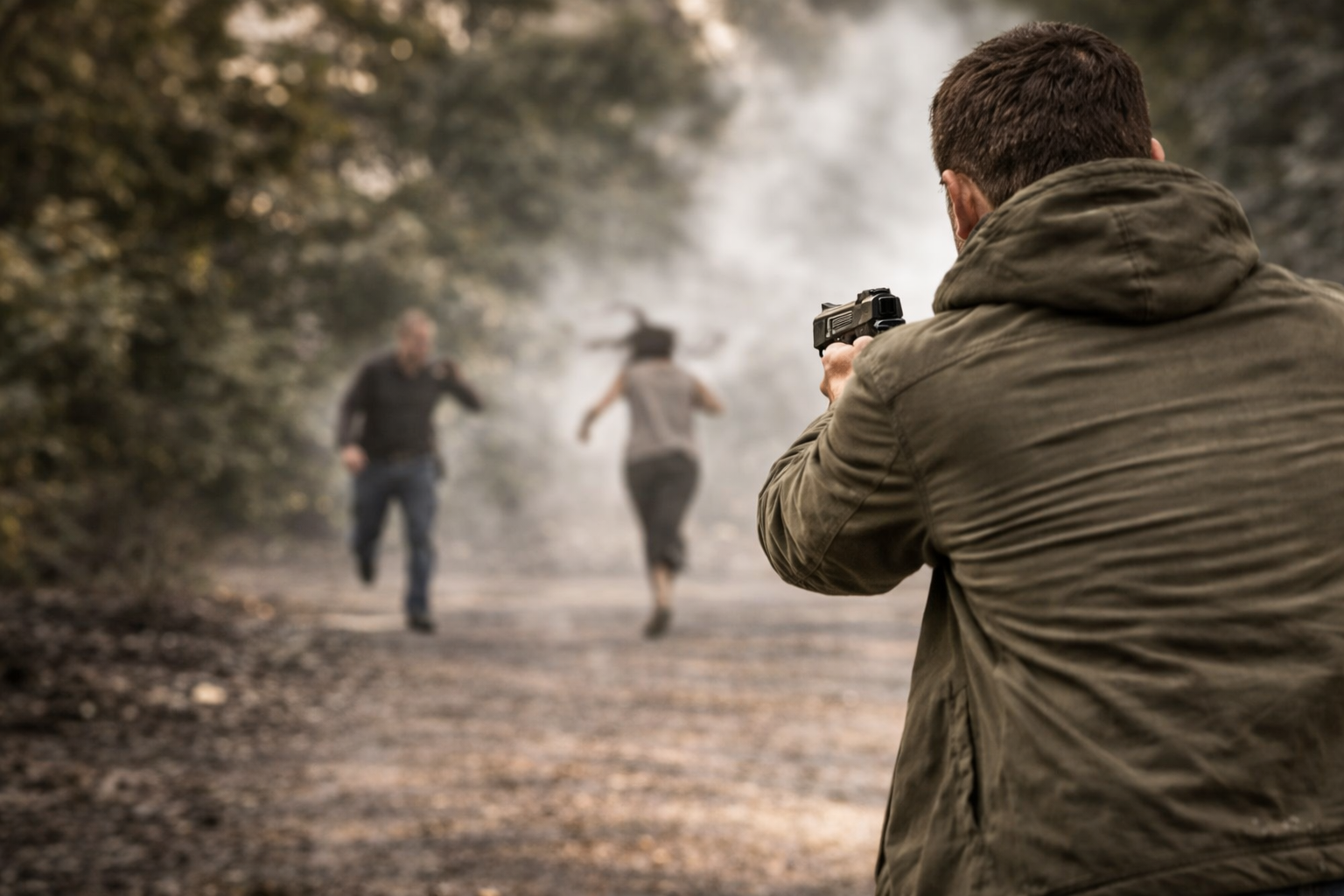
Now take a step away from the legal side for a second and think about a real-world situation.
You are out with your family or friends enjoying a day at the park. Kids are laughing, swings are clanking, and everything feels normal. Then it happens. Two loud bangs cut through the noise. At first your brain tries to process it, but your body already knows. Gunshots.
More shots follow. People start screaming. The sound of gravel and footsteps takes over as everyone runs. Your focus narrows. You are no longer watching—you are reacting.
You move toward the sound while everyone else is running the opposite direction. More shots ring out. Your heart is pounding, your breathing is heavy, and everything is happening fast. You come around a tree line and see the shooter. He turns toward you. There is no time to think. You raise your firearm and fire.
The threat stops.
Then everything changes.
Police arrive. You are detained. Questions start coming immediately. What happened? Why did you act? What did you see? What did you do?
In that moment, the best thing you can do is make it clear that you will cooperate, but you want to speak with an attorney before answering questions. From that point forward, everything you say can be used against you.
Then comes the part most people never think about. The investigation. The possibility of court. Every decision you made gets examined. And what you discover is that not every round you fired hit your intended target. In the stress, in the movement, in the moment, two innocent people were injured while trying to escape.
Now your actions, even if justified in stopping a threat, are being questioned from every angle.
This is where training and preparation start to matter in a different way. A concealed carry permit is not just a piece of paper. It represents that you have taken the time to understand the law, to receive instruction, and to approach carrying a firearm with responsibility. That can become part of your defense. It gives your attorney something to stand on when they argue that you acted as a trained and responsible individual.
The same goes for additional training. The more prepared you are, the better your decisions will be under stress. Training teaches you not only how to shoot, but when to act, when not to act, and how to manage situations that are unfolding faster than you can think.
Missouri’s permitless carry laws give people more freedom, but they do not remove responsibility or risk. Federal law still applies. Local ordinances still apply. And real-world situations are rarely as simple as people think they are.
A concealed carry permit gives you more flexibility, more protection, and a stronger position if something ever goes wrong. For many people, that alone makes it worth it.
Legal Disclaimer:
We are not attorneys, and this article is not legal advice. Laws change frequently and may vary depending on your location. You should consult a qualified attorney and review current local, state, and federal laws before carrying a firearm.
